🪴Bay Leaves: The Pretty Pantry Hack You Didn’t Know You Needed
How a humble herb keeps your flour and cupboards pest-free.
Bay leaves aren’t just for simmering soups and looking charming in a mason jar. Tucked into the right corners of your kitchen (and your baking staples), dried bay leaves have long been used as a natural pest deterrent — and there’s actual science behind it. Here’s a friendly, practical guide to using bay leaves: simple, stylish, and surprisingly effective.

Why Bay leaves work
The magic isn’t mystical — it’s chemical. Bay leaves contain essential oils and compounds that insects find unpleasant. Studies going back decades have shown crushed bay leaf compounds can discourage grain pests, and more modern analyses of bay essential oil identify specific chemicals that repel flour beetles and similar pantry pests. So while bay leaves won’t replace good storage practices, they can be a low-effort extra line of defense.

How to use Bay leaves in your kitchen (real, actionable steps)
1. Slip a leaf into flour and grain containers
Tuck a whole dried bay leaf into bags or airtight jars of flour, rice, oats, and other bulk grains. If pests are the issue, try lightly crushing a leaf before adding it (the scent releases more readily). Still keep everything sealed and cool — bay leaves help, they don’t do all the work.

2. Make little sachets for pantry shelves
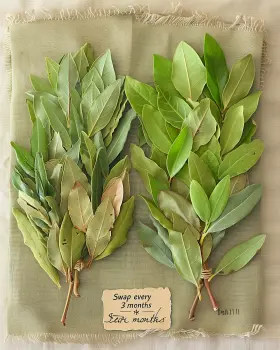
Fold 3–5 bay leaves into a small muslin bag (or a square of cheesecloth tied with twine) and tuck sachets into pantry nooks, cereal boxes, or behind canisters. They’re tidy, swapable, and look cute if you want them visible.

3. Crush & refresh for stubborn problems
If you’ve seen weevils or tiny beetles before, crush a few leaves and leave them in a shallow tray in the infested area for a few days (then toss them). Crushed leaves release more of the essential oils that pests dislike.
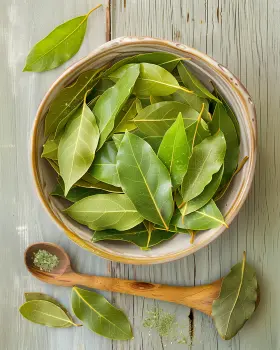
4. Use bay oil for targeted repelling
Some people use bay leaf essential oil for stronger applications (camping, storage boxes, etc.). If you go this route, dilute properly and treat sparingly — essential oils are potent and require care.

Storage, safety, and smart housekeeping
Don’t rely on Bay leaves alone. Clean spills, rotate pantry goods, and store staples in airtight containers first. Bay leaves are an assistant, not a replacement for good hygiene.
Bay leaves are not toxic — they taste bitter and are usually tougher than you’d want in a finished dish, so most cooks remove whole leaves before serving. But in terms of safety, eating them in small amounts isn’t the concern people sometimes think it is. Still: keep them out of reach of pets who might chew on things they shouldn’t.
Replace periodically. Dried bay leaves lose their punch after a while. Swap sachets every few months or when the scent fades.
Style meets function
Want your pantry to look as good as it works? Fill a small apothecary jar with a stack of dried bay leaves and a little label — functional decor that keeps pests at bay and looks lovely on an open shelf. Pair it with linen sachets and natural twine for a cozy, lived-in kitchen vignette.


Final thoughts
Bay leaves are an easy, low-cost, and attractive addition to your pantry-defense toolkit. They won’t eliminate problems created by old, open bags or soggy storage conditions, but used alongside airtight containers, rotation, and regular cleaning, they’re a small but savvy hack that fits perfectly into Kitopia’s practical, beautiful approach to homekeeping.
Cheers!